
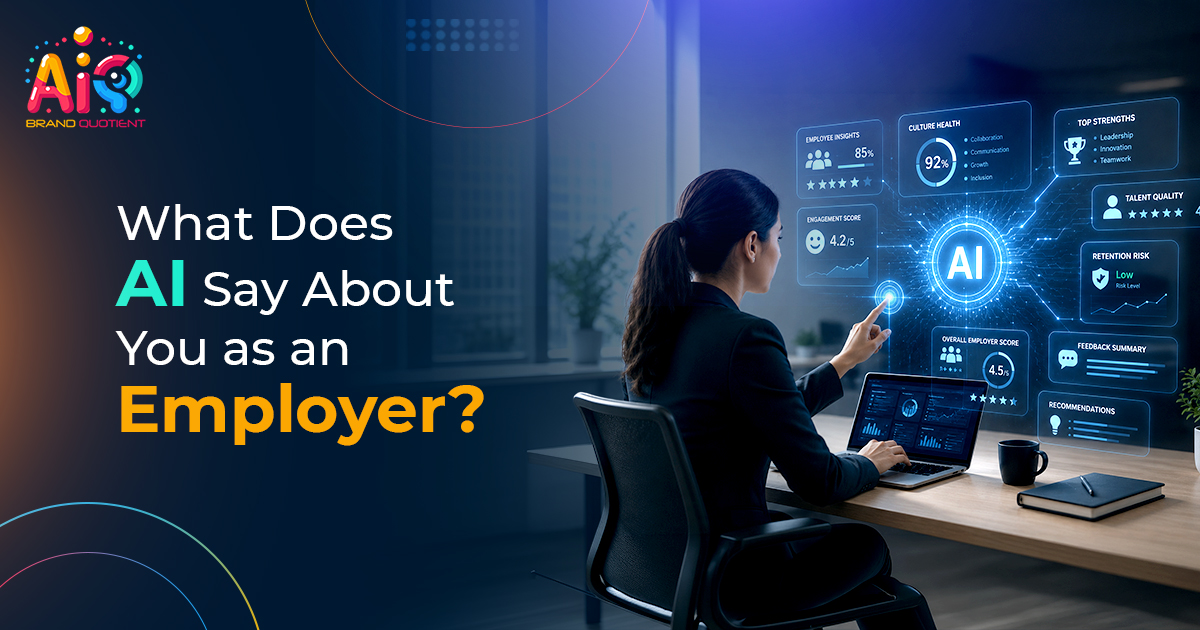
Candidates no longer rely solely on your careers page or a recruiter’s pitch to decide whether your company is worth applying to. Increasingly, their first stop is an AI chatbot ChatGPT, Gemini or Claude asked a simple but revealing question: “What is it like to work here?” The answer they get back is shaped not by your careers website alone, but by everything AI can find about you: employee reviews, LinkedIn conversations, media coverage, and leadership interviews. For employer brands, this shift raises an uncomfortable but important question: if you ran that experiment on your own company today, would you like what AI had to say?
Here’s a small experiment.
Open ChatGPT, Gemini or Claude and ask:
“What is it like to work at my company?”
Then ask a few more questions.
- What is the culture like?
- Is it a good place to build a career?
- What do employees think of the leadership?
- How does it compare with its competitors?
Would you be comfortable with the answers?
More importantly, would a potential candidate be impressed by them?
Candidates are increasingly using AI to research employers, compare opportunities and prepare for interviews. This creates an interesting challenge for employer brands.
Your organisation may invest considerable effort in shaping its EVP, careers website and recruitment campaigns. But AI doesn’t learn about you only from the content you publish.
It can also draw from employee reviews, job descriptions, LinkedIn conversations, media coverage, leadership interviews and what current and former employees say publicly.
AI sees more than your employer branding campaign. It sees the reputation surrounding it.
Your Employer Brand Is Being Interpreted
Until recently, employers had reasonable control over how they introduced themselves to candidates.
Today, AI can make that introduction for them.
It collects different pieces of information and turns them into a summary. If your employer story is clear and supported by employee experiences, that summary may work in your favour.
If the information is vague, outdated or contradictory, AI may present a version of your employer brand that you don’t recognise.
A careers website might promote flexibility while employee conversations suggest otherwise. An EVP might promise career growth, but there may be little visible evidence of internal mobility or employee development.
AI will encounter both the promise and the proof.
That makes employer branding less about controlling a message and more about building a credible and consistent experience.
Generic Promises Will Become Easier to Spot
Most employer brands use similar language.
- Great culture
- Exciting opportunities
- Inclusive workplace
- People-first organisation
These statements mean little without evidence.
If career growth is part of your EVP, show how people have grown. If innovation is central to your culture, let employees talk about what they have created. If flexibility matters, explain what it looks like in practice.
Real stories give candidates something meaningful to understand. They also help AI build a more accurate picture of the organisation.
This doesn’t mean every employee story needs to be positive or perfectly polished. An employer brand that appears too perfect can be less believable than one that speaks honestly about its expectations, challenges and working environment.
Employee Experience Is Becoming the Real Source of Visibility
An employer brand can no longer be managed only through campaigns and content calendars.
What happens inside an organisation eventually appears outside it through reviews, conversations, employee stories and social posts.
AI simply brings those signals together faster.
For employer-branding teams, the starting point is straightforward.
Ask the leading AI platforms what they know about your company. Look at how they describe you, where their information comes from and how you compare with your talent competitors.
Then identify the gap between the employer brand you want to communicate and the one candidates can actually find.
The Goal
The goal isn’t to make AI say that you are a great employer.
The goal is to create enough clarity and credible evidence for AI and candidates to reach that conclusion themselves.